This is today’s edition of The Download, our weekday newsletter that provides a daily dose of what’s going on in the world of technology. The…
MIT Technology Review lagi ngeluarin cerita yang cukup penting: This is today’s edition of The Download, our weekday newsletter that provides a daily dose of what’s going on in the world of technology. The gig workers who are training humanoid robots at home  When Zeus, a medical student in Nigeria, returns to his apartment from a long day at the hospital, he stra…. Di technology, gue lebih tertarik ke efek operasionalnya daripada dramanya. Kalau lo ngikutin technology, cerita kayak gini biasanya ngasih clue soal infra, security, atau product reliability yang bikin tim bisa shipping lebih cepat.
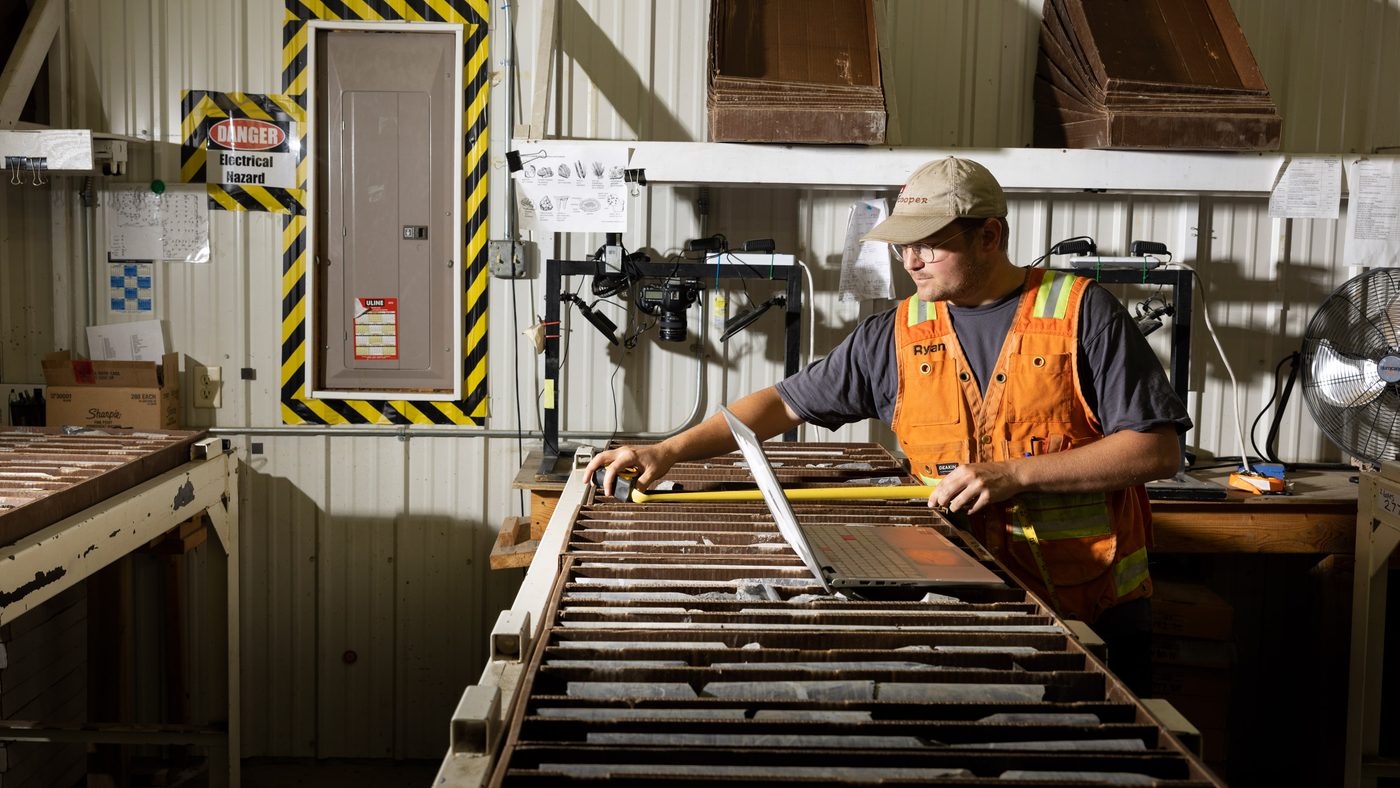
Kalau kita buka detailnya, This is today’s edition of The Download , our weekday newsletter that provides a daily dose of what’s going on in the world of technology. The gig workers who are training humanoid robots at home When Zeus, a medical student in Nigeria, returns to his apartment from a long day at the hospital, he straps his iPhone to his forehead and records himself doing chores. Zeus is a data recorder for Micro1, which sells the data he collects to robotics firms. As these companies race to build humanoids, videos from workers like Zeus have become the hottest new way to train them. Micro1 has hired thousands of them in more than 50 countries, including India, Nigeria, and Argentina. The jobs pay well locally, but raise thorny questions around privacy and informed consent. The work can be challenging—and weird. Read the full story . —Michelle Kim Our readers recently voted humanoid robots the “11th breakthrough” to add to our 2026 list of 10 Breakthrough Technologies. Check out what else officially made the cut . AI benchmarks are broken. Here’s what we need instead. For decades, AI has been evaluated based on whether it can outperform humans on isolated problems. But it’s seldom used this way in the real world. While AI is assessed in a vacuum, it operates in messy, complex, multi-person environments over time. This misalignment leads us to misunderstand its capabilities, risks, and impacts. We need new benchmarks that assess AI’s performance over longer horizons within human teams, workflows, and organizations. Here’s a proposal for one such approach: Human–AI, Context-Specific Evaluation . —Angela Aristidou, professor at University College London and faculty fellow at the Stanford Digital Economy Lab and the Stanford Human-Centered AI Institute. MIT Technology Review Narrated: can quantum computers now solve health care problems? We’ll soon find out. In a laboratory on the outskirts of Oxford, a quantum computer built from atoms and light awaits its moment. The device is small but powerful—and also very valuable. Infleqtion, the company that owns it, is hoping its abilities will win $5 million at a competition . The prize will go to the quantum computer that can solve real health care problems that “classical” computers cannot. But there can be only one big winner—if there is a winner at all. —Michael Brooks This is our latest story to be turned into an MIT Technology Review Narrated podcast, which we’re publishing each week on Spotify and Apple Podcasts . Just navigate to MIT Technology Review Narrated on either platform, and follow us to get all our new content as it’s released. The must-reads I’ve combed the internet to find you today’s most fun/important/scary/fascinating stories about technology. 1 OpenAI just closed the biggest funding round in Silicon Valley history It raised $122 billion ahead of its blockbuster IPO, which is expected later this year. ( WSJ $) + It’s also prepping a push to “rethink the social contract.” ( Vanity Fair $) + Campaigners are urging people to quit ChatGPT. ( MIT Technology Review ) 2 Iran has threatened to attack 18 US tech companies It’s eyeing their operations in the Middle East. ( Politico ) + Targets include Nvidia, Apple, Microsoft, and Google. ( Engadget ) + Iran struck AWS data centers earlier this month. ( Reuters $) 3 Artemis II is about to fly humans to the Moon. Here’s the science they’ll do Their experiments will set the stage for future explorers. ( Nature ) + You can watch the launch attempt today. ( Engadget ) 4 Putin is trying to take full control of Russia’s internet New outages and blockages are cutting the country off from the world. ( NYT $) + Can we repair the internet? ( MIT Technology Review ) 5 A robotaxi outage in China left passengers stranded on highways Baidu vehicles froze on the streets of Wuhan. ( Bloomberg $) + Police are blaming a “system failure.” ( Reuters $) 6 US government requests for social media user data are soaring They’ve skyrocketed by 770% in the past decade. ( Bloomberg $) + Is the Pentagon allowed to surveil Americans with AI? ( MIT Technology Review ) 7 Tesla has admitted that humans sometimes drive its robotaxis Remote drivers occasionally control them completely. ( Wired $) 8 A satellite-smashing chain reaction could spiral out of control This data visualization captures the dangers of space collisions. ( Guardian ) + Here’s all the stuff we’ve put into space. ( MIT Technology Review ) 9 Meta’s smartglasses can turn you into a creep According to one journalist who wore them for a month. ( Guardian ) 10 A Claude Code leak has exposed plans for a virtual pet We could be getting a Tamagotchi for the GenAI era . ( The Verge ) Quote of the day “From now on, for every assassination, an American company will be destroyed.” —Iran’s Islamic Revolutionary Guard Corps (IRGC) threatens US tech firms in an affiliated Telegram, per CNBC . One More Thing ACKERMAN + GRUBER How one mine could unlock billions in EV subsidies In a pine farm north of the tiny town of Tamarack, Minnesota, Talon Metals has uncovered one of America’s densest nickel deposits. Now it wants to begin mining the ore. Products made from the nickel could net more than $26 billion in subsidies through the Inflation Reduction Act (IRA), which is starting to transform the US economy. To understand how, we tallied up the potential tax credits available. Read the full story to find out what we discovered . —James Temple We can still have nice things A place for comfort, fun and distraction to brighten up your day. (Got any ideas? Drop me a line .) + A selfless group of gluttons tried to taste-test every potato chip in the world. + Get romantic inspiration from these penguins’ engagement pebbles . + Good news: global terrorism has hit a 15-year low . + Enjoy endless new views through these windows around the world . sering jadi indikator tentang maturity sebuah produk atau stack. Di area ini, yang penting bukan cuma fitur baru, tapi apakah sistemnya makin stabil, lebih mudah di-scale, dan nggak nambah friction buat user atau tim internal.
Research tambahan ngasih konteks yang lebih tajam: Research lookup returned no usable results.. Ini bikin pembacaan awal jadi lebih grounded, bukan cuma bergantung ke judul atau ringkasan feed. Kalau ada detail yang saling nambah, gue pakai itu buat bikin cerita ini lebih utuh dan lebih berguna buat lo.
Advertisement
Slot in-article yang tampil setelah paragraf ketiga.
Di level produk dan operasional, cerita kayak gini biasanya nunjukin satu hal: perusahaan yang lebih cepat belajar bakal punya advantage. Kalau workflow makin otomatis, tim yang masih manual kebanyakan bakal kalah gesit. Kalau distribusi makin ketat, brand yang punya channel kuat bakal lebih unggul. Jadi meskipun judulnya kelihatan khusus, implikasinya sering masuk ke area yang jauh lebih dekat ke keputusan bisnis sehari-hari daripada yang orang kira.
Ada juga layer kompetisi yang sering kelewat. Begitu satu pemain besar bergerak, pemain kecil biasanya punya dua pilihan: ikut naik level atau makin susah relevan. Itu sebabnya gue suka lihat berita bukan sebagai peristiwa tunggal, tapi sebagai bagian dari pola. Siapa yang bergerak duluan? Siapa yang nunggu? Siapa yang bisa mengeksekusi lebih rapi? Dari situ biasanya kebaca apakah sebuah tren masih hype atau udah mulai jadi infrastruktur.
Buat pembaca yang peduli ke hasil praktis, pertanyaan yang paling berguna bukan “apakah ini keren?” tapi “apa yang harus gue ubah setelah baca ini?”. Kalau lo founder, bisa jadi jawabannya ada di positioning, pricing, atau channel distribusi. Kalau lo trader, mungkin yang perlu dipantau adalah sentimen, momentum, dan apakah pasar udah overreact. Kalau lo cuma pengin update cepat, minimal lo jadi ngerti kenapa topik ini muncul dan kenapa orang lain mulai ngomongin sekarang.
Gue juga sengaja ngasih ruang buat konteks yang sedikit lebih tenang, karena berita yang rame sering bikin orang lompat ke kesimpulan terlalu cepat. Tidak semua headline berarti revolusi. Kadang ada yang cuma noise, kadang ada yang benar-benar awal perubahan. Bedanya ada di konsistensi tindak lanjutnya. Kalau dalam beberapa siklus berikutnya topik ini terus muncul, besar kemungkinan kita lagi lihat pergeseran yang serius, bukan sekadar buzz harian.
Jadi kalau lo minta versi pendeknya: The Download: gig workers training humanoids, and better AI benchmarks penting bukan karena judulnya doang, tapi karena dia nunjukin arah pergerakan yang bisa berdampak ke cara orang bikin produk, baca pasar, dan nyusun strategi. Buat gue, itu inti yang paling worth it untuk dibawa pulang. Sisanya bisa lo simpan sebagai detail, tapi arah besarnya udah cukup jelas: pergeseran ini layak dipantau, bukan di-skip.
Technology lagi bergerak cepat, jadi jangan cuma lihat headline.
MIT Technology Review
Catatan redaksi
Kalau lo cuma ambil satu hal dari artikel ini
Technology update dari MIT Technology Review.
Sumber asli
Artikel ini direwrite dari sumber MIT Technology Review. Kamu bisa cek versi aslinya di https://www.technologyreview.com/2026/04/01/1134993/the-download-gig-workers-training-humanoids-better-ai-benchmarks/.